
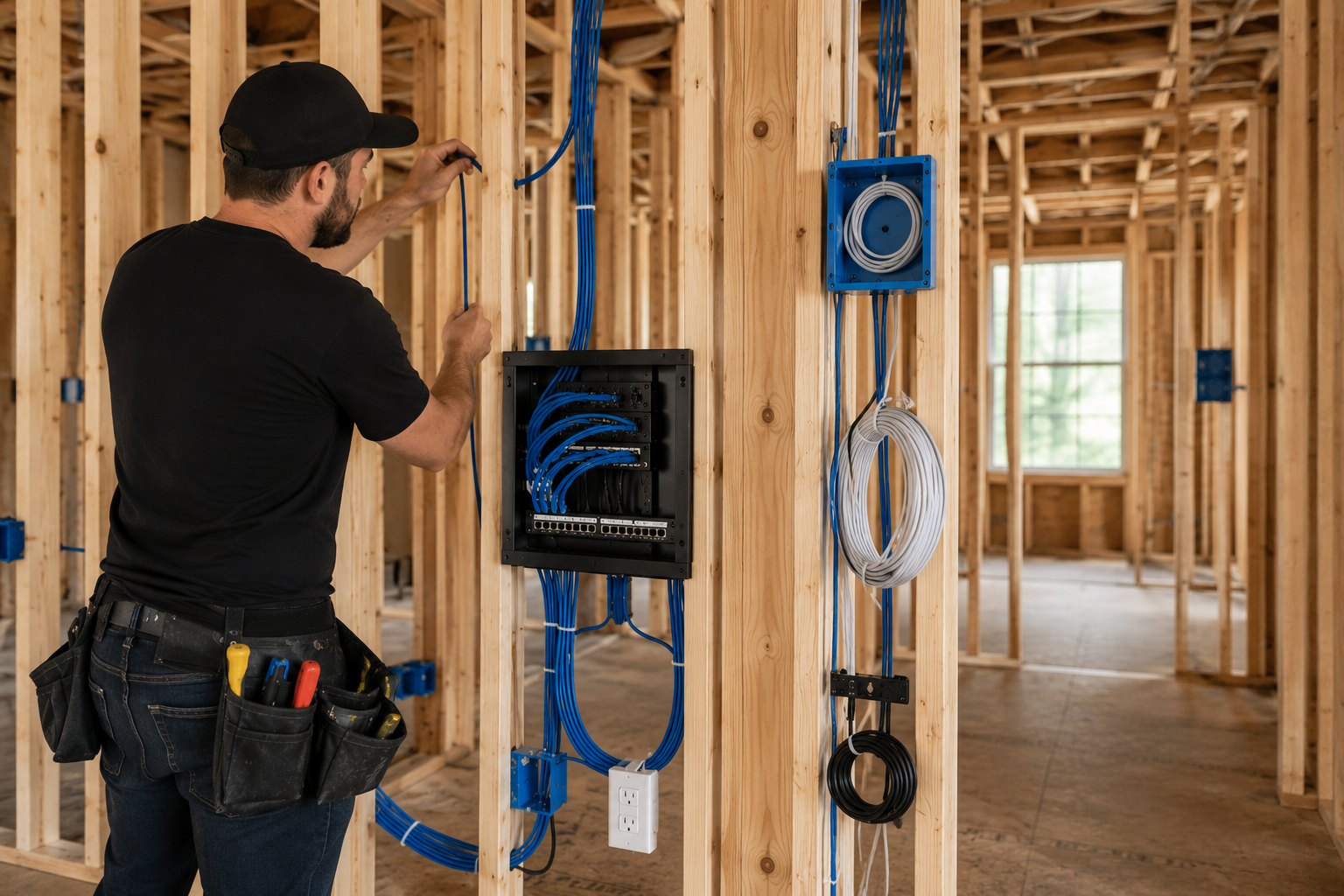
If you’re building a custom home or tackling a major renovation, you’ve probably spent plenty of time thinking about kitchens, flooring, paint colours, and lighting. Those are the fun decisions. But there’s one part of the project that’s easy to overlook, and it can end up being one of the most expensive mistakes you make.
We’re talking about low-voltage pre-wiring.
The best time to think about your home’s technology isn’t after the drywall goes up. It’s while the walls are still open. Whether you’re planning a home office, security cameras, whole-home audio, better Wi-Fi, or simply a cleaner-looking entertainment system, getting the wiring in place early saves money, reduces headaches, and gives you far more options down the road.
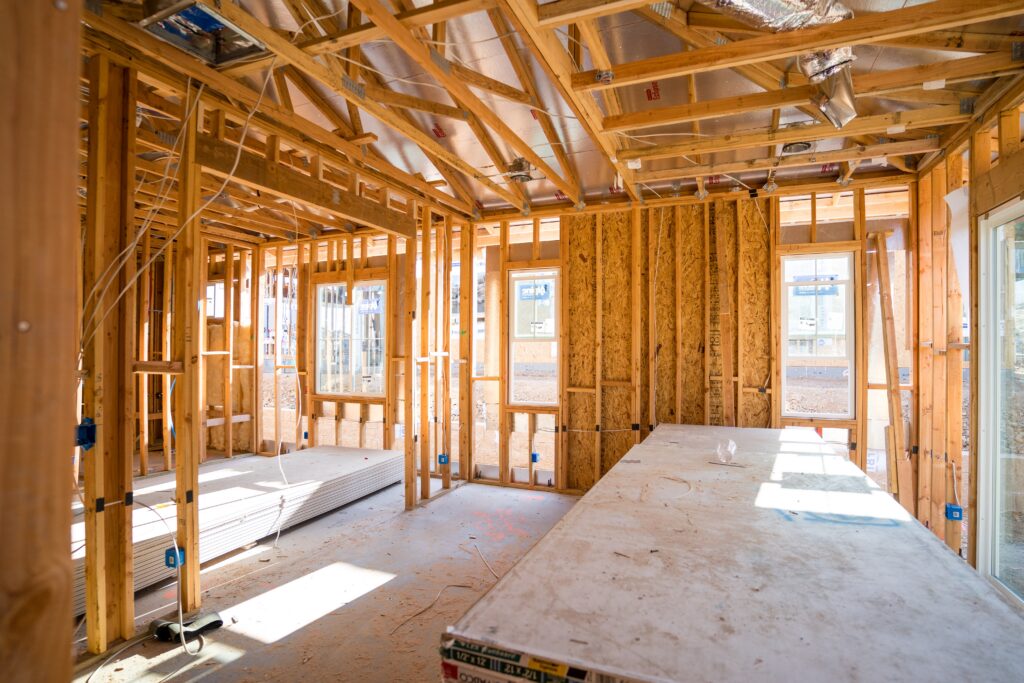
The Walls Are Open. Take Advantage of It.
Once insulation and drywall are installed, running new cables becomes much more complicated. What could have taken a technician a few minutes during framing can turn into hours of cutting drywall, fishing wires through finished walls, making repairs, and repainting.
That’s why low-voltage pre-wiring is one of the smartest investments you can make during construction.
Even if you don’t plan on installing every piece of technology right away, putting the infrastructure in place now means you’re ready whenever you are.
Think Beyond Today’s Technology
Technology changes quickly. Five years ago, many homes didn’t have video doorbells, multiple streaming devices, or dedicated work-from-home spaces. Five years from now, your needs will probably look different again.
The wiring inside your walls, however, is expected to last for decades.
That’s why structured cabling new construction is about much more than today’s gadgets. It’s about creating a flexible foundation that can support whatever comes next without opening your walls all over again.
Cat6 cable, speaker wire, network drops, and conduit all give you room to grow as your family’s needs change.

Your Wi-Fi Is Only as Good as the Network Behind It
One of the biggest misconceptions we hear is that everything is wireless now, so wiring doesn’t really matter.
The reality is that wireless networks work best when they’re supported by a solid wired backbone.
A professional residential network installation allows important devices like wireless access points, televisions, desktop computers, and media equipment to use wired connections whenever possible. That reduces congestion on your Wi-Fi network and helps improve performance throughout the home.
The result is smoother video calls, more reliable streaming, faster downloads, and fewer frustrating dead spots.
Entertainment Looks Better Without the Mess
Nobody wants to see cables hanging below a television or extension cords running across the room.
Planning your audio video rough-in during construction allows equipment to be hidden where it belongs while keeping rooms clean and uncluttered.
This is the perfect time to install wiring for wall-mounted TVs, in-ceiling speakers, outdoor entertainment spaces, media rooms, or whole-home audio systems. Everything is ready before the drywall goes up, leaving you with a finished space that looks intentional instead of pieced together later.
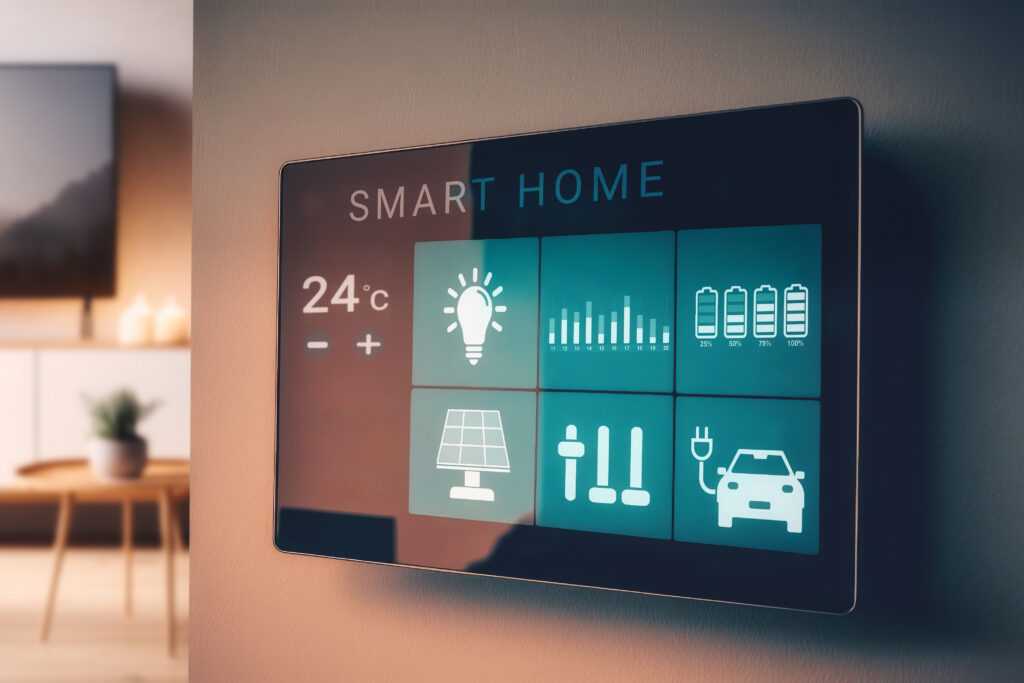
Smart Home Features Start with Smart Planning
When people hear “smart home,” they often think of a few light switches or a smart thermostat. In reality, today’s homes can integrate everything from lighting and climate control to security systems, motorized shades, irrigation, and multi-room audio.
Good smart home wiring design gives you the flexibility to add those features when the time is right.
Maybe your budget only allows for a few smart devices today. That’s completely fine. With proper planning, the wiring is already in place, making future upgrades simple instead of expensive.
Spending a Little Now Can Save a Lot Later
Nobody enjoys paying for the same job twice.
Installing low-voltage pre-wiring during framing is significantly less expensive than trying to retrofit wiring after construction is complete. Once drywall is finished, every new cable may involve cutting walls, repairing surfaces, repainting, and working around finished spaces.
Planning ahead eliminates those unnecessary costs and helps protect the investment you’ve already made in your home.
Technology Planning Should Be Part of the Build
Technology shouldn’t be an afterthought. It deserves a seat at the table alongside the builder, electrician, HVAC contractor, and other trades involved in your project.
Early planning allows everyone to coordinate equipment locations, cable pathways, network closets, and future expansion before anything gets covered up.
That’s exactly where experienced low-voltage professionals bring value. They help make sure your home’s technology infrastructure supports both your current needs and whatever comes next.
Build It Once. Build It Right.
A beautiful home isn’t just about what you can see. It’s also about what’s hidden behind the walls.
Whether you’re planning a custom build or a major renovation, low voltage pre-wiring gives you the flexibility to add new technology without tearing your home apart later. From reliable networking and cleaner entertainment spaces to future-ready smart home features, a little planning during construction can save thousands of dollars and countless headaches down the road.
If you’re still in the framing stage, now is the time to have the conversation. Your future self will be glad you did.