Most homeowners get into smart home technology the same way. They install a video doorbell. It works. They add a smart bulb. That works too. Then they start thinking: how hard could the rest of it be? That’s where things get complicated. At My Guys Know How, a significant portion of our calls aren’t new installs, they’re rescues. Homeowners who got two-thirds of the way through a build, then hit a wall of conflicting apps, dead zones, and devices that stopped talking to each other. If you’re asking yourself, “Should I hire a professional to install my smart home system?” you’re already asking the right question, and this guide will give you a straight answer.
This guide won’t tell you DIY is always wrong. It’s not. But it will tell you exactly where DIY makes sense, where it quietly falls apart, and how to make the right call before you’re already knee-deep in a project you can’t finish.
When DIY Smart Home Setup Actually Works
There’s a real category of smart devices that genuinely are plug-and-play. Smart plugs, battery-powered video doorbells, smart bulbs in standard sockets, and Wi-Fi thermostats in homes with conventional wiring. These are low-risk, reversible installs that a confident homeowner can knock out in an afternoon. No professional needed, no special tools, no wiring knowledge required.
DIY works best when the project stays small and platform-consistent. One ecosystem, a handful of devices, no automation routines that depend on cross-device triggers. The honest ceiling for most DIY setups is five to eight devices living inside a single brand’s app. Google Home, Apple Home, or Amazon Alexa running a few compatible devices is achievable without help. That’s a legitimate and functional outcome.
The problem is what happens next. That first successful install creates a kind of false confidence. One smart switch works perfectly, so you add cameras from a different brand, a motion sensor from a third, and a thermostat from a fourth. Suddenly you have four apps, inconsistent behavior, and routines that trigger halfway and stop. That’s the gap between installing a device and building a smart home system. The two are not the same thing.
Where DIY Installations Go Wrong More Often Than You’d Think
Installer reports and trade surveys consistently place compatibility and integration failures in DIY smart home setups at roughly 40 to 46 percent within the first year. That’s not a small number. The most common cause is protocol mismatch. Smart devices communicate over different standards: Wi-Fi, Zigbee, Z-Wave, Bluetooth, Thread, and Matter. A Zigbee bulb won’t respond to a Wi-Fi hub without a bridge. A proprietary camera system often won’t integrate with a third-party automation routine at all. Most homeowners buy the hardware first and research compatibility second. That order of operations is expensive.
Weak Wi-Fi is the second major failure point, and it’s the one nobody expects. A router that handles streaming and web browsing fine can fall apart under the load of 20-plus connected smart devices. Devices appear connected but drop off unpredictably. Automations fail at random. Motion sensors lag by several seconds. The homeowner assumes the device is defective and returns it. The actual problem is a network that was never designed for this kind of distributed, always-on load. Reliable home automation starts with reliable network infrastructure, and most retail routers don’t provide it.
The third issue is subtler but just as frustrating: the incomplete automation problem. DIY systems tend to end up as a collection of devices rather than an integrated system. Lights live in one app, the thermostat in another, cameras in a third, no shared routines, no consistent behavior across rooms. Getting devices installed is the easy part. Getting them to work together intelligently, responding to each other and adjusting based on time of day or occupancy, is the part most DIY builds never reach.
The Components That Always Need a Professional
Some categories of smart home work simply aren’t DIY territory. Hardwired security cameras, alarm sensors, access-control systems, and interconnected smoke detector networks all require cable runs through walls, ceilings, and sometimes conduit. Incorrect wiring on security or fire systems creates liability, code violations, and genuine safety risk. This work belongs to a licensed low-voltage technician or electrician the first time, not after something goes wrong.
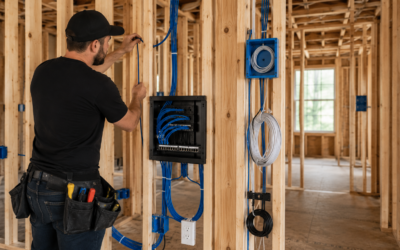
In-ceiling speakers, whole-home Wi-Fi built on hardwired access points, and rack-based automation controllers require structured cabling. That means speaker wire through walls, Ethernet runs to every access point location, and control cabling from the central hub to every system in the home. This infrastructure is the foundation everything else depends on. If the foundation is wrong, every device built on top of it is unstable. This isn’t something you can patch later without tearing into walls again.
Hardwired smart switches and dimmers connect directly to your home’s electrical system. Some require a neutral wire that older homes simply don’t have at the switch box. Motorized shades use dedicated low-voltage wiring. Smart HVAC integration requires a clean connection to existing climate wiring. These aren’t judgment calls. They require a professional with the right license, the right tools, and the code knowledge to do the work safely. Guessing at electrical work to save a few hundred dollars is one of the more reliable ways to spend a few thousand fixing it later.
Should I Hire a Professional to Install My Smart Home System? What It Costs in 2026
Typical Single-Device Fees
Single-device professional installs, a smart device setup service in the most straightforward sense, are more affordable than most homeowners expect. A smart thermostat installed by a pro runs roughly $200 to $500. Smart locks and individual wired cameras typically fall $400 per device. For most straightforward installs, labor runs $100 to $250. When you factor in the cost of a failed DIY attempt and a return visit to correct it, those numbers look reasonable fast.
Whole-Home Pricing Breakdown
Whole-home automation installation pricing has a wide range because scope varies significantly. A complete professional smart home installation runs $2,000 to $15,000 depending on what’s included. Mid-range packages covering networking, lighting control, and a few automation zones typically land between $2,000 and $6,000. Full integration across lighting, climate, security, audio, and motorized shading can reach $10,000 to $15,000 or more. What that price includes matters: a legitimate on-site install covers a site survey, device placement, system configuration, full testing, and a walkthrough so you know how to use what you paid for.
Reputable installers provide a manufacturer warranty on hardware and a separate workmanship warranty on labor, typically 90 days to one year. Better firms add extended service agreements for remote diagnostics, software updates, and priority support. They carry general liability insurance, which protects you if something goes wrong during the installation. Get all warranty terms in writing before signing anything, and confirm exactly what’s covered, including who pays for labor if a device fails and needs replacement.
How to Find a Home Automation Installer You Can Actually Trust
A real smart home integrator designs the system before a single device goes on the wall. They assess your home’s networking infrastructure, identify protocol compatibility requirements, plan cable runs, and build toward a unified control experience. They don’t mount a few devices and hand you a bag of apps. The difference between a real integrator and a cheap handyman shows up six months after the job is done, when your system either still works, or it doesn’t.
Look for CEDIA credentials, specifically IST (Integrated Systems Technician) for general residential work and ESC-N for networking-focused projects. Manufacturer certifications from brands like Control4, Lutron, or Savant matter too, because they confirm the installer has been trained on the exact hardware going into your home. Confirm state or local licensing if the project involves electrical or security wiring, and verify the company carries liability insurance before anyone sets foot in your house.
My Guys Know How has been doing this work for 25 years across Indiana, Michigan, and Illinois. We handle everything from pre-wire design on new construction to full automation programming on existing homes. We also take on rescue projects, homeowners whose DIY build stalled, or whose previous installer disappeared mid-job. Our 5.0 rating comes almost entirely from referrals, which is what happens when a company’s reputation depends on the system still working two years after we leave. If you’re in the Midwest and need a straight answer about your project, reach out to our team directly.
Three Questions That Tell You Whether to Hire a Professional to Install Your Smart Home System
Before you decide, answer these three questions honestly. How many devices and ecosystems are involved? More than eight devices, or more than one brand’s platform, and professional installation is the stronger path. Does anything in your plan require hardwired installation or in-wall cable runs? If it does, that’s professional territory, full stop. And finally: do you want a unified control experience, or are individual apps for each device acceptable? If you want one app, one interface, one system that behaves consistently, you need a professional smart home installation.
If you’re already noticing devices dropping off randomly, automations that partially trigger and stop, multiple apps that don’t sync, or a router overwhelmed by device load, the DIY phase is over. These aren’t signs of bad products. They’re signs of a system that was built without infrastructure planning. At that point, a professional rescue install is almost always faster and cheaper than continuing to troubleshoot on your own.
The Honest Bottom Line
DIY makes sense for simple, single-device installs within a controlled ecosystem, a smart plug, a thermostat, a bulb or two. That’s a reasonable Saturday project. Once you’re building a real smart home system, with networking, lighting control, automation routines, and security all expected to work together, professional installation isn’t a luxury. It’s the reason the system actually functions the way you imagined it would when you started planning.
The right installer shows up with a plan already built, not just a bag of hardware. They test everything before they leave, explain how it works, and have a real answer ready for what happens when something stops working six months down the road. That’s the standard. Whether you’re starting fresh or fixing something that stalled, hold any professional you hire to it. And if you’re still asking yourself whether you should hire a professional to install your smart home system, the fact that you’ve read this far probably tells you what you already know.