
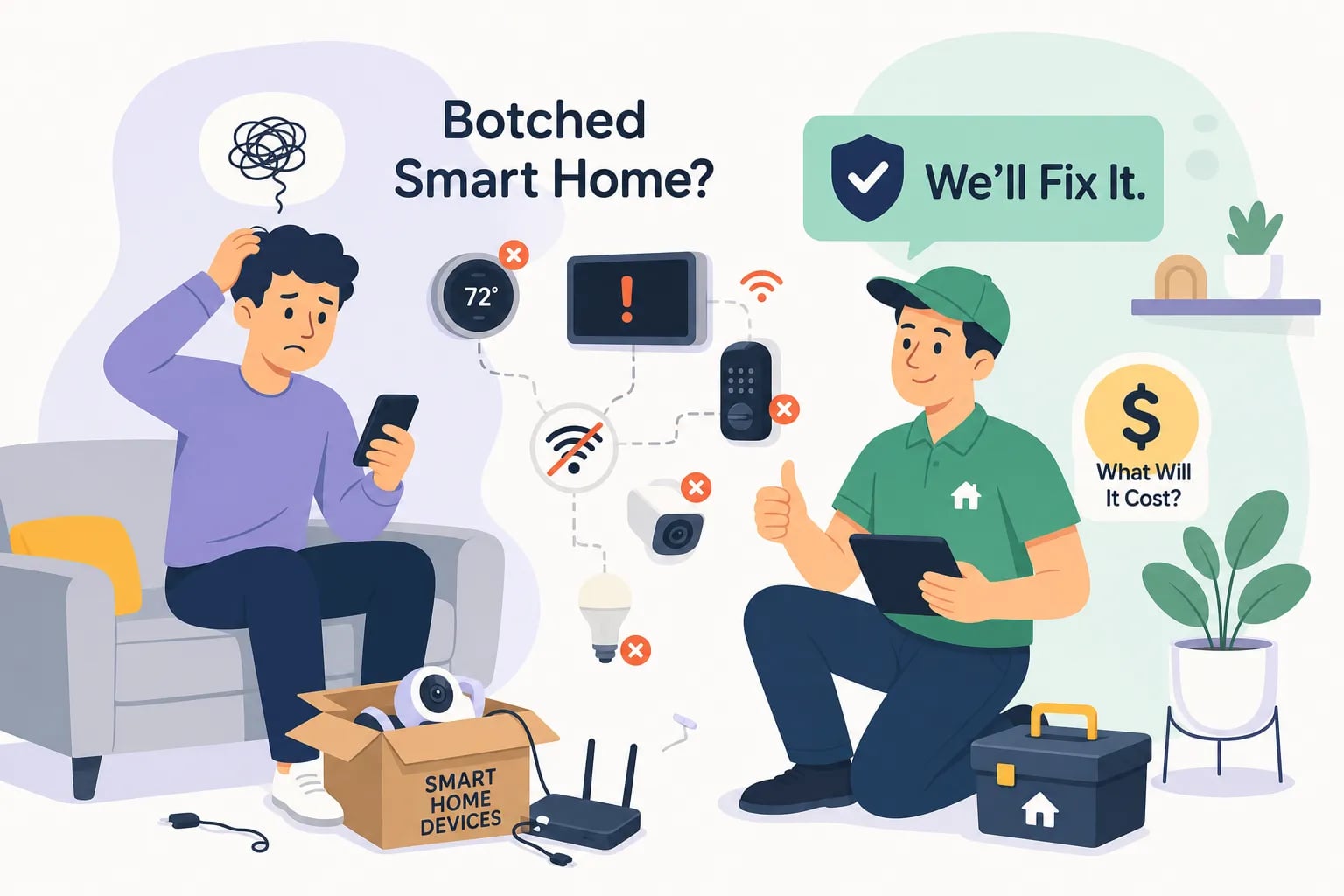
The check cleared. The installer packed up. And now half the lights don’t respond, your automation scenes are broken, and the person who wired all of this hasn’t returned a call in three weeks. This situation happens more than most homeowners expect. There is no single national licensing standard for the smart home industry, and local or state requirements vary widely, which means almost anyone can call themselves an integrator. Knowing who to call to fix a botched smart home installation, and what to verify before signing anything, is what separates a clean resolution from a second expensive mistake.
This guide covers exactly who to call, what credentials to check, and what realistic costs and timelines look like so you can make a clear-headed decision rather than a desperate one.
Who to Call to Fix a Botched Smart Home Installation
Most homeowners cycle through the same mental list when something goes wrong: electrician, IT person, handyman, or the original installer. Each sounds plausible. Each is wrong for different reasons when the core issue is a failed smart home system.
When an AV integrator or home automation specialist is the right call
Integrated system failures, hub architecture issues, network misconfiguration, and device interoperability problems require someone who works in this domain daily. An AV integrator or home automation specialist understands control platforms, automation logic, and how every layer of a smart home system is supposed to communicate. They’ve seen failed installs before. They know what bad work looks like and how to untangle it. For most botched smart home installations, this is the right hire, not a general contractor who dabbles in tech.
When you also need a licensed electrician
Electricians are the right call for one specific thing: mains wiring, circuit issues, or any hardwired work that crosses into licensed electrical territory. Many qualified integration companies handle this internally or coordinate a licensed electrician as part of their process. You shouldn’t have to manage two separate contractors. If a company can’t handle that coordination, that’s worth noting before you hire them.
Why a general handyman makes the problem worse
A handyman is fine for mounting a TV bracket. They are not equipped to diagnose hub failures, rebuild a network that was configured wrong from the start, or re-program automation sequences. Hiring one for smart home repair is how homeowners end up paying twice for the same problem, don’t make that call.
What to Do Before You Call Anyone
There are a few things worth doing before any home automation technician arrives. None of this requires technical knowledge. It just requires paying attention and documenting what you see.
Document everything first
Take photos and short videos of every visible problem: error screens, devices that don’t respond, incomplete wiring, and anything that looks unfinished. Write down when the problems started and what changed right before they appeared. This documentation speeds up diagnosis and gives you a paper trail if there’s a warranty dispute or liability question later, don’t skip it. The more context a repair technician has before they arrive, the faster and cheaper the fix tends to be.
Safety checks you can’t skip
If any device is sparking, overheating, smoking, or there’s a burning smell near the installation, stop. Don’t troubleshoot. Clear the area and call a licensed electrician before anyone else. For non-emergency situations, power-cycling devices and checking for obviously loose cable connections is reasonable triage. Beyond that, leave the diagnosis to the professional arriving with the right tools and training.
References and reviews that actually mean something
Ask for recent references from jobs similar to yours, specifically system rescues or takeover projects. Call those references. Ask whether the work finished on budget, whether the crew cleaned up, and what happened when something needed follow-up. Online reviews tell part of the story. A referral-driven business with consistent five-star ratings tells you that real clients vouched repeatedly and with their own reputation attached.
Insurance documents worth requesting
Request a current certificate of insurance before anyone steps into your home. Confirm the policy covers low-voltage electronics installation specifically. General liability policies sometimes exclude this category, and you want to know that before a mistake creates a larger repair bill than the one you’re already facing.
Red Flags That Tell You to Keep Looking
Some signals disqualify a repair candidate quickly. The faster you spot them, the faster you move on.
A qualified smart home service company has no reason to hesitate when asked for a license number, insurance certificate, or manufacturer authorization. Reluctance, vague answers, or “we can get you that later” are disqualifiers. Legitimate professionals have this documentation ready. Anyone who pushes back on basic vetting is telling you something important about how they operate.
On pricing: the original installer was probably the cheapest option, that’s often why this situation exists. A repair quote that comes in dramatically lower than competing bids isn’t a deal. It signals that the technician either doesn’t understand the scope or plans to cut the same corners. Get at least two quotes from qualified integrators and evaluate them on detail and specificity, not price alone.
What a Smart Home Repair Audit Includes
A qualified integrator doesn’t swap out one broken device and leave. A proper smart home system rescue follows a structured process, and it starts before any hardware is touched.
What the system audit covers
The first step is a full assessment: every device reviewed, network architecture checked, automation sequences tested, and a complete picture of what the original installer did and didn’t do. This home automation troubleshooting audit is how an accurate scope of work gets built. Skip any pro who wants to skip this step, they’re guessing, and guessing on a botched install usually compounds the original problem.
Timeline and realistic cost ranges
Simple repairs, a single misconfigured device or a hub that needs reprogramming, typically run $225 to $400. Moderate corrections involving reprogramming and component replacement range from $250 to $500. If the original install involved serious wiring errors, missing infrastructure, or a network that needs to be rebuilt from scratch, costs can reach $1,000 to $6,000 or more depending on scope. The biggest cost driver is straightforward: whether walls need to be opened and wiring needs to be redone.
Minor fixes can often be resolved in a single visit. Moderate system corrections typically take one to two days. A full system rescue covering re-wiring, re-programming, and rebuilding a unified automation setup may take several days depending on the size of the home and how much documentation the original installer left behind, in rescue scenarios, thorough documentation from the previous installer is rarely available.
Who’s Responsible for the Original Mess
Before you pay for repairs, understand who is actually on the hook financially and legally. This determines whether you’re out-of-pocket from the start or whether someone else absorbs part of the cost.
How installer workmanship warranties work
Most legitimate installation companies offer a workmanship warranty covering installation errors, typically ranging from 90 days to 24 months, with 12 months representing a common industry norm. If the original installer is still reachable and still in business, document the defects in writing and formally request remediation under the workmanship warranty before hiring anyone else. Keep copies of every communication. If they dispute the claim, you’ll need that paper trail.
What your home warranty probably won’t cover
Standard home warranties frequently exclude smart home devices. They also tend to deny claims when improper installation is identified as the cause of failure. Don’t assume your home warranty will absorb the repair cost. Read the exclusions and ask the warranty company directly about installation-caused failures before submitting a claim.
When manufacturer warranty applies
If a device failed because of a product defect rather than an installation error, the manufacturer warranty is the right avenue. In practice, separating “bad device” from “bad install” requires a professional assessment. That’s another reason the audit step matters. A qualified technician can tell the difference, which protects you when it’s time to file a claim.
Frequently Asked Questions
Who do I call to fix a botched smart home installation?
Call a licensed AV integrator or home automation specialist, not a handyman, not a general electrician, and not the original installer who created the problem. Look for CEDIA credentials, verified manufacturer authorizations for your specific platform, and references from completed system rescue projects.
Who pays for fixing a botched smart home install?
Start by checking whether the original installer offers a workmanship warranty, which most legitimate companies do for 90 days to 24 months. If they’re unreachable or dispute the claim, document everything in writing. Home warranties typically exclude smart home devices and installation-caused failures, so don’t count on that coverage without reading the fine print first.
How long does a smart home system rescue take?
Simple fixes often wrap up in a single visit. Moderate corrections, reprogramming, component swaps, partial network rebuilds, typically take one to two days. A full rescue involving wiring corrections, platform rebuilds, and unified automation re-programming can take several days, depending on home size and what the original installer documented.
How do I find a smart home installer near me who can fix someone else’s work?
Search for CEDIA-certified integrators in your area and verify manufacturer authorization for your specific platform (Control4, Lutron, Savant, etc.) through the brand’s official dealer portal. Ask specifically whether the company takes on system rescue and takeover projects, not every integrator does, and you want one with direct experience untangling failed installs.
Getting This Resolved the Right Way
A botched smart home install is fixable. The fix requires the right professional: an experienced home automation integrator or AV specialist with verified credentials, documented references, and a track record in smart home repair and system rescue work. Not a handyman. Not the lowest bid on a local listings site.
The homeowners who resolve this quickly are the ones who hire slow, vet thoroughly, and don’t let urgency push them toward another underqualified contractor. If you’re in Indiana, Michigan, or Illinois and need a team that checks every box this article describes, My Guys Know How specializes in exactly this kind of work. Contact them directly to find out what a proper system rescue actually looks like.