There’s a moment a lot of people have at some point.
You’re standing in the backyard, maybe the grill’s going, maybe friends are over, and someone says, “You know what would make this perfect? A TV out here.”
It’s a great idea. Honestly, it’s one of those upgrades that sounds simple but completely changes how you use your space. Backyard movie nights, the game on while you hang out, music videos playing in the background… it all sounds easy enough to pull off.
And for a lot of people, the first instinct is the same: grab an extra indoor TV and set it up outside.
Totally fair. It seems like it should work.
But here’s where things start to get a little tricky, and it has nothing to do with doing anything “wrong.” It’s just that outdoor environments play by a completely different set of rules than your living room does. That’s exactly why a weatherproof TV exists in the first place.
Let’s walk through what’s actually going on out there, and what makes the difference between a setup that kind of works… and one that just feels right every time you turn it on.
The Backyard Looks Different to a Screen Than It Does to You
The first thing most people notice isn’t damage or failure. It’s visibility.
You flip the TV on during the day, step back, and suddenly what looked great inside feels… a little off. The picture’s there, but it’s fighting the environment.
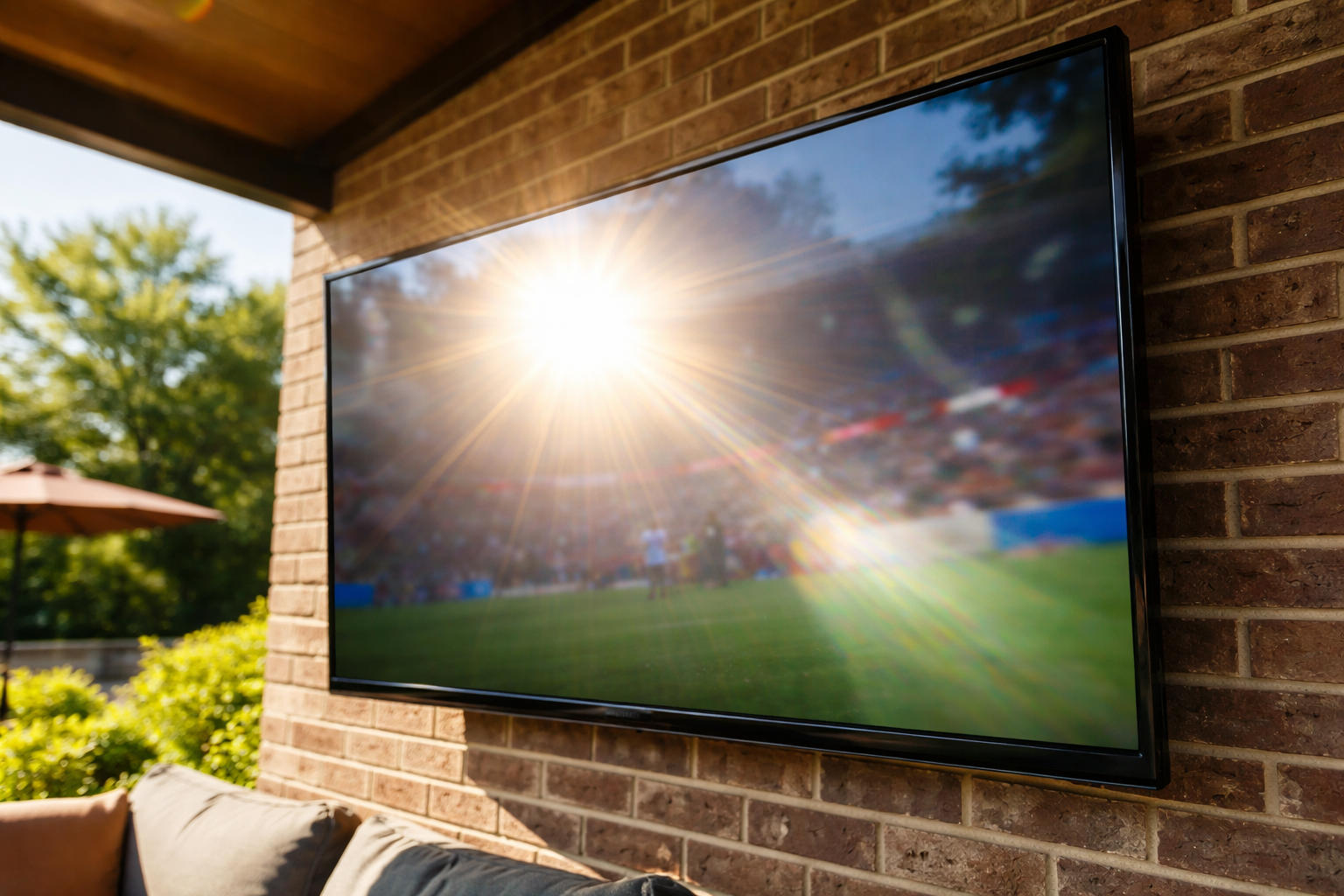
Sunlight is a completely different beast than indoor lighting. It’s stronger, more direct, and constantly shifting. Even in a shaded area, there’s still a lot more ambient light bouncing around than most TVs are designed to handle.
That’s where an anti-glare outdoor screen starts to matter.
Indoor TVs typically have glossy finishes that look fantastic in controlled lighting. Outside, those same finishes can act more like mirrors. Instead of seeing the game, you’re catching reflections of the sky, the patio, or whoever’s standing behind you.
A weatherproof TV is built with this in mind. The screen is designed to manage reflections and cut through that extra light, so you’re actually watching what you turned it on for.
Brightness Isn’t a Bonus Feature. It’s the Whole Game
This is one of those details that doesn’t sound exciting until you see it in action.
TV brightness is measured in something called nits. You don’t need to memorize numbers, but here’s the simple version: indoor TVs are built for indoor brightness levels. Outdoor spaces are dramatically brighter, even on a cloudy day.
So what happens?
An indoor TV doesn’t stop working, it just gets washed out. Colors fade, contrast drops, and everything looks a little flat. You can still see it, but it’s not the experience you were picturing.
A weatherproof TV is designed to push through that brightness. It’s not just a little brighter, it’s built specifically so the image stays clear and sharp even when the sun is doing its thing.
That’s the difference between “we can kind of see it” and “this actually works.”
If backyard movie night is part of the vision, this is the piece that makes it feel like a real setup instead of a workaround.
Heat Is Doing More Than You Think
This is the part that usually flies under the radar.
Every TV generates heat when it’s running. Indoors, that heat dissipates in a controlled environment. Temperatures are stable, airflow is predictable, and everything stays within a comfortable range.
Outside, you’re adding a few extra variables:
- Direct or indirect sunlight
- Higher ambient temperatures
- Less controlled airflow
Even on a mild day, those factors stack up.
An indoor TV can still run in those conditions, but it’s working harder than it was designed to. Over time, that extra stress can affect performance and longevity.
A weatherproof TV is built to manage that heat. It uses materials and internal systems that are designed for outdoor conditions, so it can handle temperature swings without constantly pushing its limits.
It’s one of those things you don’t see happening, but it makes a big difference over time.
It’s Not Just Rain. It’s Everything in the Air
When people think about outdoor electronics, rain is usually the first concern.
And yeah, rain matters. But it’s not the only factor.
Outdoor environments come with a mix of things that don’t exist inside:
- Humidity and moisture in the air
- Morning dew
- Dust and pollen
- Temperature changes from day to night
Even in a covered space, those elements are still present. They move through the air, settle on surfaces, and slowly make their way into places they’re not supposed to be.
Indoor TVs aren’t sealed against that kind of exposure. Over time, that can lead to issues that are hard to spot at first but build up gradually.
A weatherproof TV is designed to handle those conditions. It’s sealed, protected, and built to operate in environments where the air itself is part of the equation.
It’s less about surviving a storm and more about handling everyday exposure without a second thought.
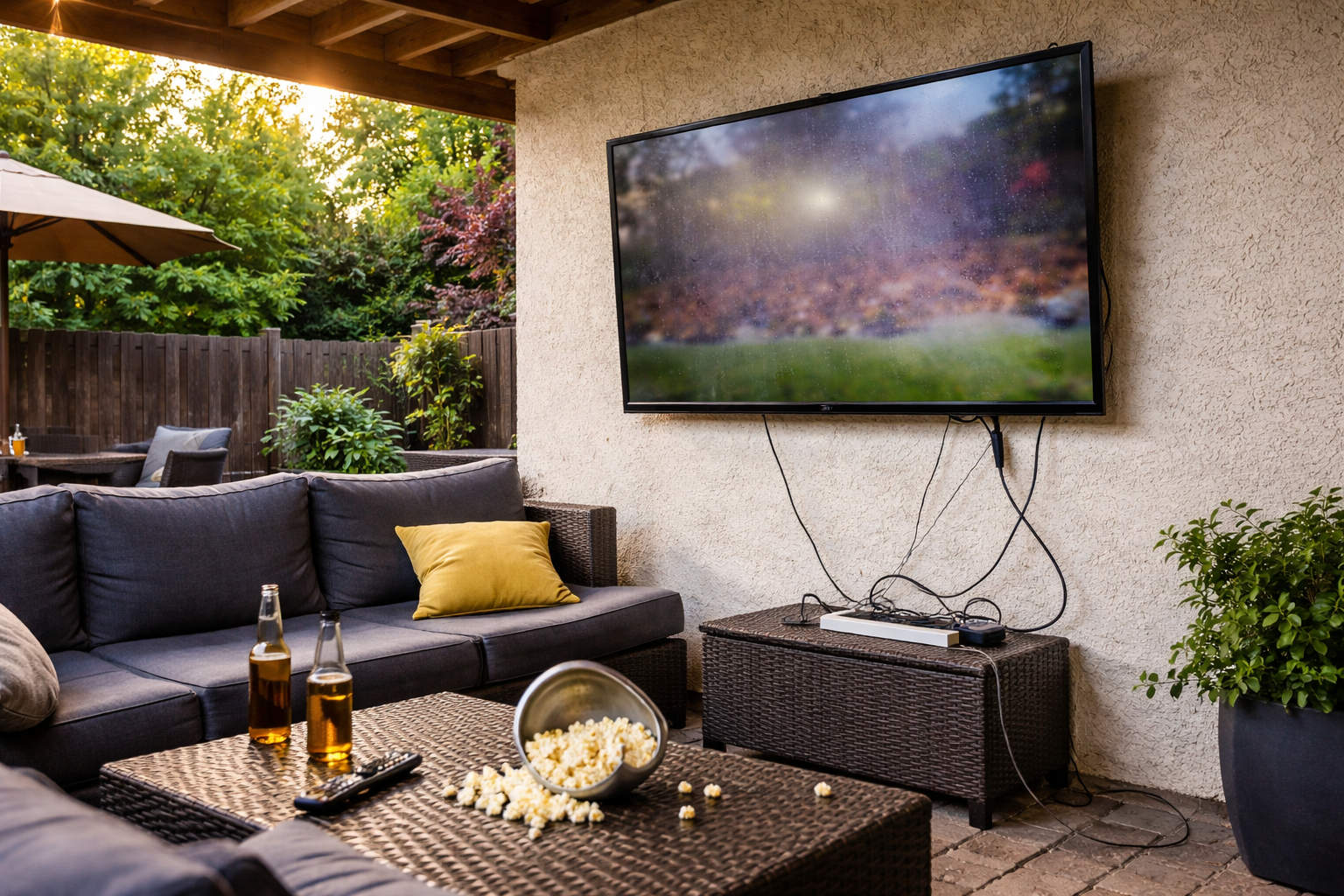
Outdoor Installation Is Its Own Skill Set
Mounting a TV indoors is usually pretty straightforward. Find the studs, pick a good height, and you’re set.
Outside, there are a few more layers to think about.
Sun direction, for example, plays a bigger role than most people expect. Where the light hits throughout the day can change how the screen looks at different times.
Viewing angles matter more too, especially if people are moving around instead of sitting in one spot.
Then there’s the hardware itself. Mounts, brackets, and connections all need to hold up to outdoor conditions, not just support the weight of the TV.
Outdoor television installation is less about making it work and more about making it work well. When everything is placed and set up with intention, the whole system feels effortless.
That’s where a weatherproof TV really gets to do what it was built for.
Not Every Outdoor Setup Needs the Same Thing
Here’s something that’s easy to overlook: not every backyard is the same.
A fully covered patio has very different conditions than an open deck that gets full sun most of the day.
Some spaces deal more with glare. Others deal more with heat. Some are exposed to everything, and others are partially protected.
That’s why weatherproof TV options come in different levels. Some are built for shaded areas, while others are designed to handle direct sunlight without breaking a sweat.
Matching the TV to the space is what makes everything come together. It doesn’t have to be overcomplicated, it just needs to be intentional.
What It Feels Like When It’s Done Right
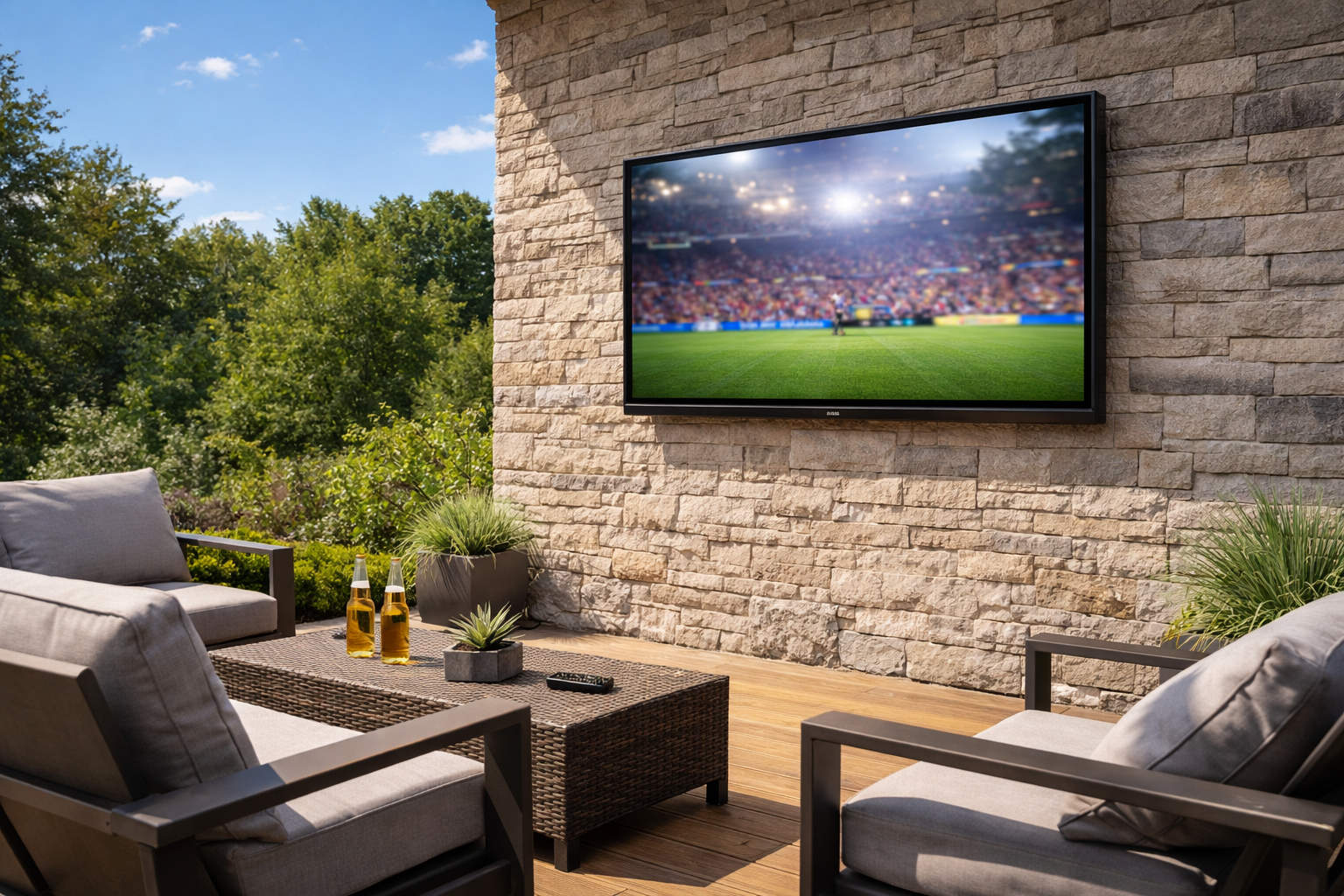
When everything lines up, the difference is immediate.
You turn the TV on, and the picture is clear, even in the middle of the day. There’s no adjusting, no squinting, no wondering if it’s going to hold up.
You don’t have to think about the weather. You don’t have to move anything around. It’s just there, ready whenever you are.
That’s the real value of a weatherproof TV setup. It takes what could feel like a workaround and turns it into something that actually fits the space.
Build It Once, Enjoy It Every Time
The idea of a backyard TV is a good one. It’s one of those upgrades that makes your space more usable, more social, and just more fun to be in.
And getting there doesn’t mean overthinking everything or going over the top. It just means choosing the right approach for an outdoor environment.
A weatherproof TV isn’t about making things complicated. It’s about making sure the setup works the way you expect it to, not just on day one, but every time you use it.
If you’re thinking about adding a screen outside, you’re already on the right track.
From there, it’s just about setting it up in a way that lets you actually enjoy it. If you need help bringing your vision to life, we specialize in creating custom indoor-outdoor entertainment spaces that are built to last.