
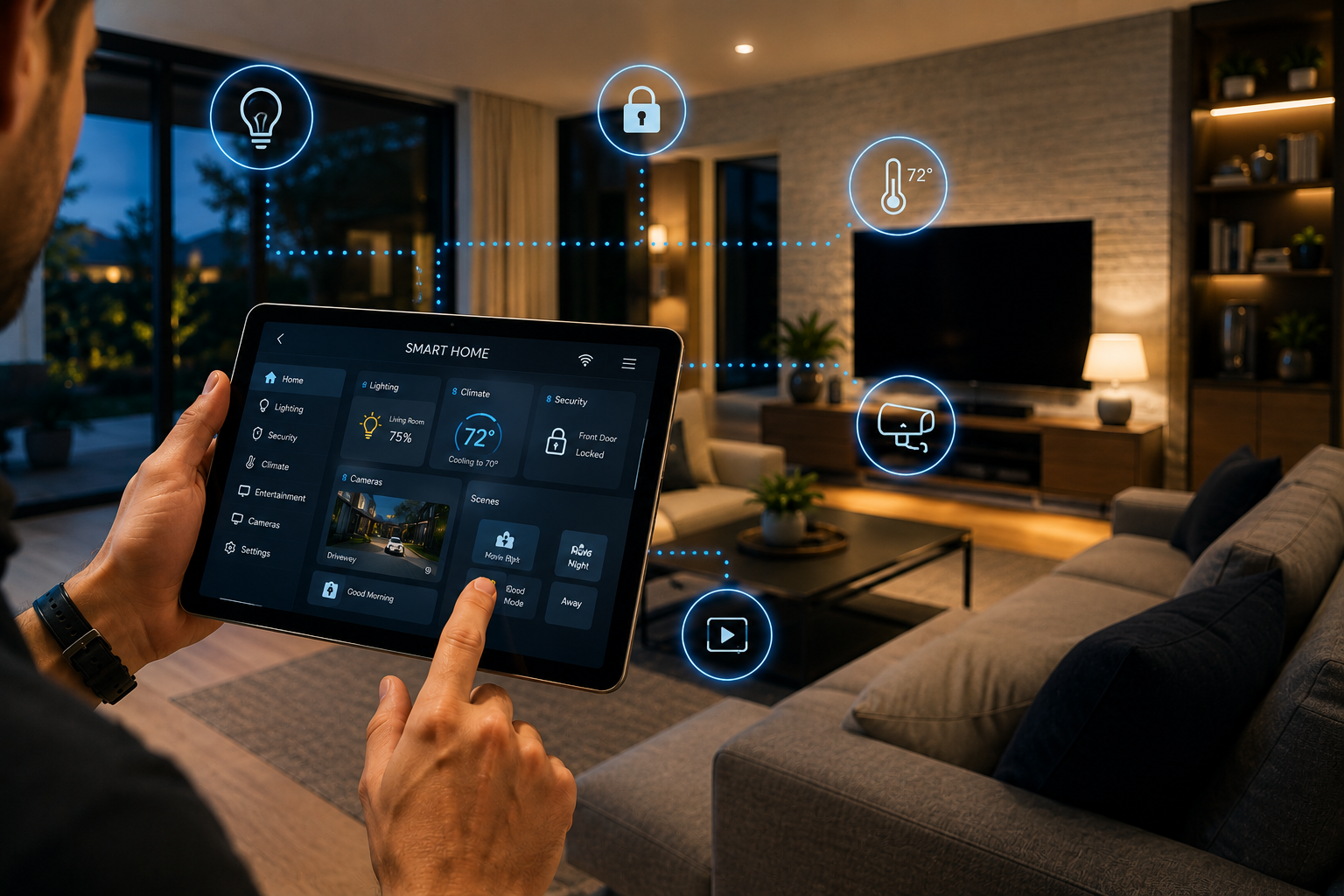
Smart homes have come a long way from simple timers, remote-controlled lights, and voice assistants that could answer basic questions. Today, AI smart homes are becoming more capable of learning routines, recognizing patterns, and making adjustments automatically based on how a home is used.
Some of these advancements are genuinely useful. Others are more impressive in a product demonstration than they are in everyday life. As artificial intelligence becomes a bigger part of home technology, homeowners are increasingly trying to separate practical benefits from marketing hype.
At My Guys Know How, we enjoy seeing technology evolve, but we also believe smart homes should remain practical. The goal is not to fill a house with gadgets because they’re new or trendy. The goal is to create a home that feels more comfortable, secure, and enjoyable to live in.
What AI Actually Means in a Smart Home
Artificial intelligence sounds complicated, but in most homes it performs a fairly simple role. AI home technology learns from patterns and uses that information to improve automation.
A smart thermostat may learn when people are typically home and adjust temperatures accordingly. Security cameras can become better at identifying the difference between normal activity and something that deserves attention. Lighting systems can adjust based on time of day, occupancy, or homeowner preferences.
The biggest shift is that connected home devices are becoming better at working together. Instead of operating independently, security, lighting, climate control, entertainment, and other systems can communicate with one another to create a smoother experience. When everything is integrated properly, homeowners spend less time managing technology and more time enjoying the benefits.
The Benefits of AI Smart Homes
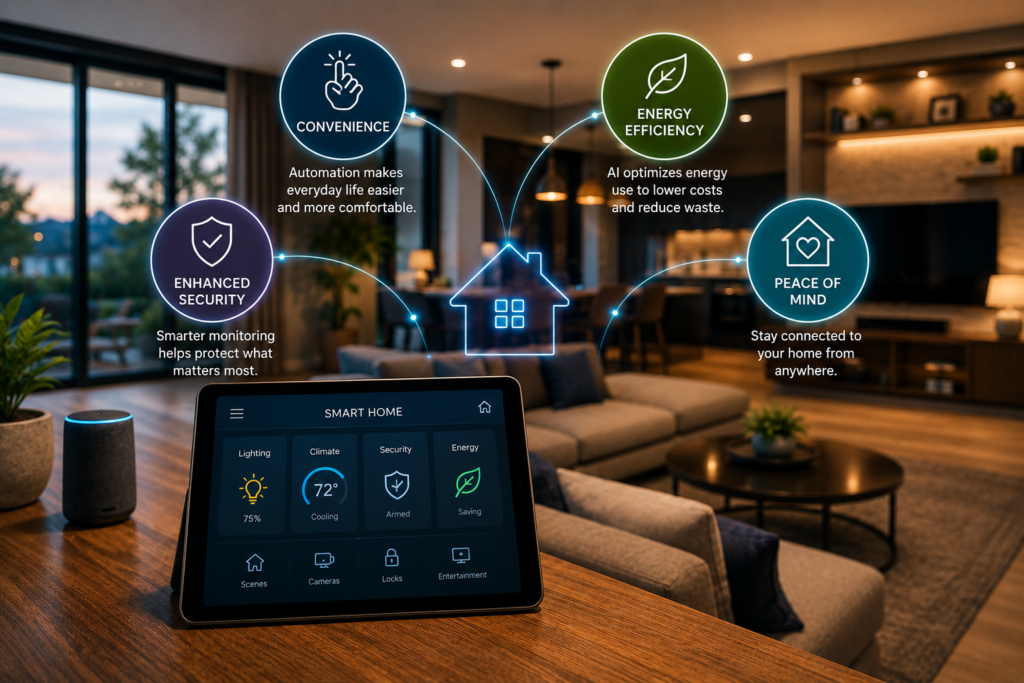
There is a reason AI smart homes continue to gain popularity. When implemented thoughtfully, they can improve convenience, efficiency, and peace of mind without adding unnecessary complexity.
Everyday Convenience
One of the biggest advantages of smart home automation is that it removes small frustrations from everyday life. A home can automatically adjust lighting in the evening, lock doors at bedtime, or create personalized settings for different family members.
None of these features are life-changing on their own. Together, however, they can make a home feel more responsive and comfortable. The best systems often fade into the background because they quietly handle tasks that homeowners would otherwise manage manually.
Better Energy Efficiency
Many homeowners invest in smart technology for convenience and discover energy savings as an added benefit. AI home technology can monitor how spaces are being used and make adjustments throughout the day.
Instead of heating, cooling, or lighting empty rooms unnecessarily, smart systems can focus resources where they are actually needed. Those improvements can reduce waste while helping maintain a comfortable living environment.
Smarter Security
AI security systems have improved dramatically over the last several years. Older systems often generated alerts whenever a branch moved or an animal crossed the yard. Newer technology is becoming much better at identifying activity that actually matters.
Many systems can recognize people, vehicles, and packages while reducing false alarms. Smart technology doesn’t replace good security planning, but it can make a security system significantly more useful.
Where Homeowners Should Be Careful
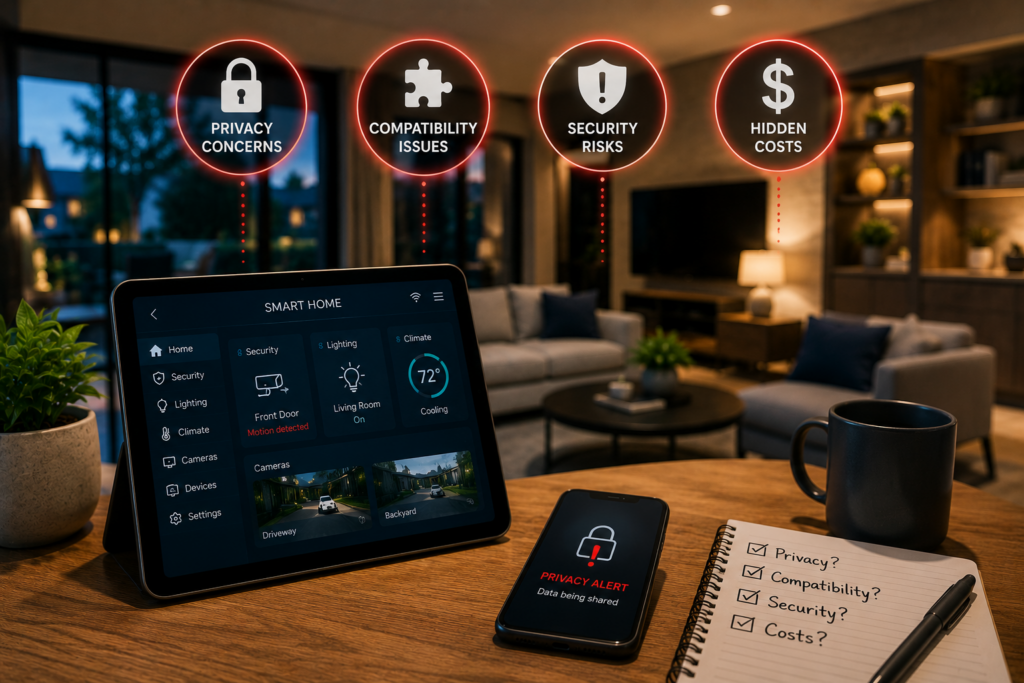
As exciting as these advancements can be, not every AI feature deserves an automatic yes. Taking time to ask a few questions before investing can prevent frustration later.
Privacy Considerations
One of the biggest conversations surrounding AI smart homes involves smart home privacy. Many connected home devices collect information to improve automation and personalization. Depending on the system, that may include usage habits, occupancy patterns, voice commands, or video footage.
Different homeowners have different comfort levels when it comes to data collection, and that’s perfectly reasonable. What matters is understanding what information is being collected, where it is stored, and how it is being used. A good smart home plan should include conversations about privacy from the beginning.
Compatibility Problems
One of the most common mistakes we see isn’t buying a bad product. More often, homeowners end up with several good products that were never designed to work together.
A family may start with a smart speaker, then add a video doorbell, smart lighting, cameras, and a thermostat over time. Eventually they find themselves managing multiple apps and troubleshooting systems that don’t communicate properly. The result is a home that feels more complicated instead of more convenient.
The best home automation systems are designed with integration in mind. Creating a long-term plan before adding devices can save significant time, money, and frustration.
Too Much Automation
Technology should support daily life, not take it over. Some homeowners become so focused on adding features that they lose sight of the original goal.
An effective smart home should feel predictable and intuitive. If family members are constantly adjusting settings, fighting notifications, or wondering why lights are behaving unexpectedly, the system is probably doing too much. Good technology works quietly in the background while allowing homeowners to remain in control.
What the Future of Smart Homes Looks Like
AI smart homes will continue becoming more capable in the years ahead. Security systems will become more accurate, energy management will become more efficient, and automation will become more seamless.
The most successful smart homes, however, probably won’t be the ones with the most technology. They’ll be the homes where technology works so naturally that homeowners barely think about it. Instead of demanding attention, the system simply helps create a more comfortable, efficient, and secure environment.
That has always been our view of smart home technology. The goal isn’t to chase every new trend or buy every new gadget. It’s to use technology thoughtfully, solve real problems, and make everyday life a little easier.
When that happens, a smart home stops feeling like technology and starts feeling like home.