Most people assume installing a Ring camera is a 20-minute job. Mount it, scan a QR code, done. Then they hire the wrong person, the app never connects, the motion alerts fire every time a leaf blows past, and the camera that was supposed to make them feel safer ends up as an expensive Wi-Fi dead zone on their front porch. It’s a frustratingly common story.
This guide covers what to actually expect from a professional Ring camera installation: what’s included, what it costs in 2026, what technical hurdles get in the way, and how to find a local installer who handles all of it. If you’re in the Midwest and want a crew like My Guys Know How, one that treats your camera as part of a whole-home system rather than a standalone gadget, that’s covered here too.
By the end, you’ll know exactly what to look for, what to ask, and what a real Ring installation service should deliver before anyone drills a single hole in your wall.
What a professional Ring camera install actually includes
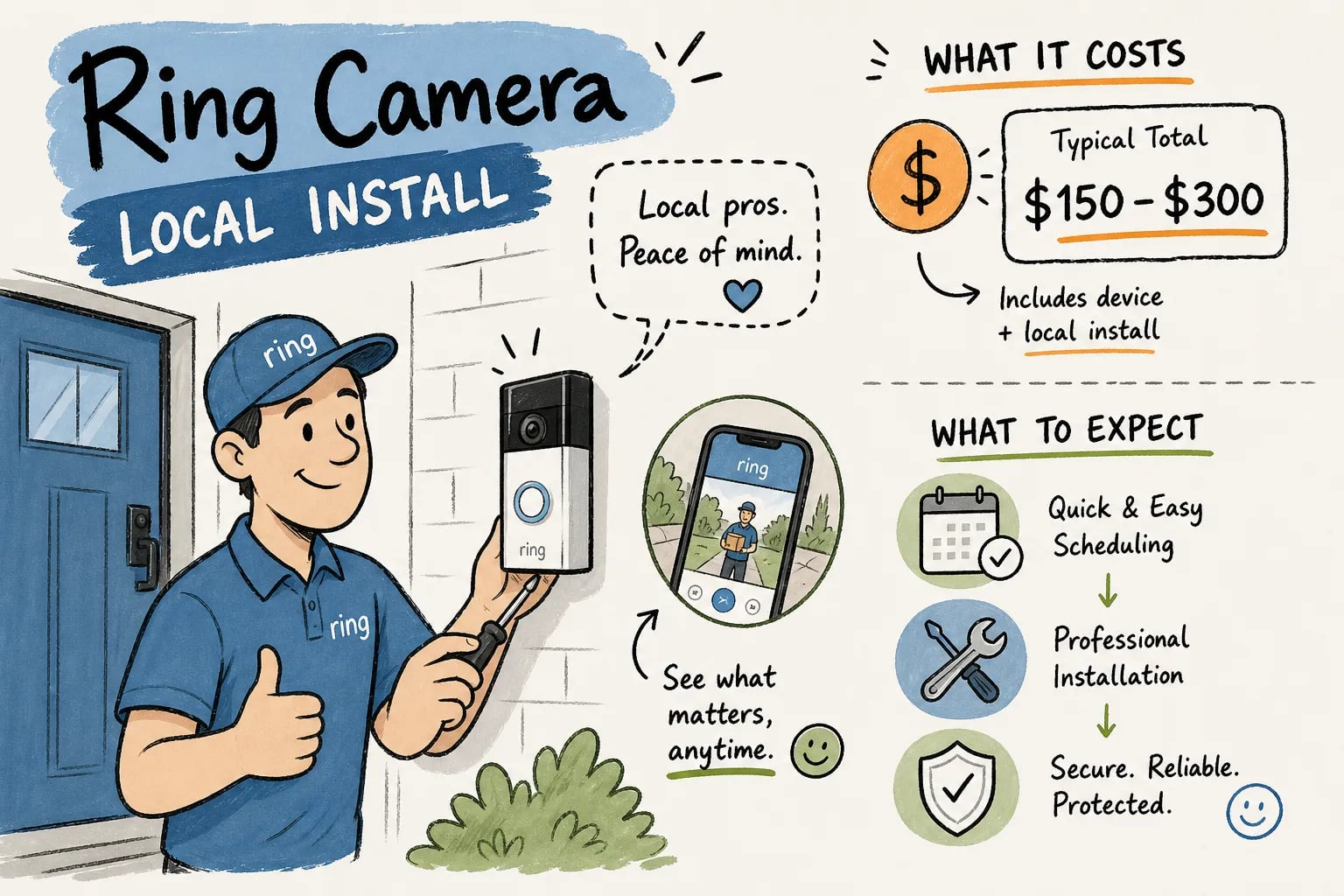
The word “installation” means different things to different providers, and that gap matters when you’re comparing quotes. A standard professional Ring install typically covers the following:
- Assessing the location for mounting and signal viability
- Mounting the device on the correct surface
- Handling basic wiring or battery configuration
- Pairing the camera to your home Wi-Fi
- Setting up the Ring app and configuring motion zones and alerts
- Removing the old unit if one exists
- Walking you through how everything works
Services like HelloTech and OnTech (through Amazon Home Services) advertise this core scope, and Ring’s own professional install framing closely matches it.
What most standard installs do not include is equally important to understand. Repairing damaged wiring, major electrical work, network troubleshooting beyond basic setup, structural surface repair, and transformer replacement are typically billed as add-ons or excluded entirely. HelloTech explicitly excludes repair of damaged parts and wiring from its standard scope. This is exactly where quotes start to diverge: a qualified integrator catches these issues before touching your wall; a basic handyman might not even know to look for them. Getting the full scope in writing before work starts isn’t optional, it’s the move.
How much Ring camera installation costs near you in 2026
The price range is wider than most homeowners expect, and it’s worth understanding the variables before you collect your first quote. For a battery-powered Ring doorbell, a straightforward install runs about $100 to $130. Wired doorbells land between $130 and $260 depending on whether transformer work is involved. Outdoor cameras in a standard mount scenario fall in the $130 to $160 range, climbing to $200 to $250 or more when power routing, difficult access, or high-location rigging is required. These figures reflect national averages based on 2026 installation-cost data, and local labor rates in the Midwest, Indiana, Michigan, and Illinois included, can shift them in either direction.
What pushes a quote above the base price almost always falls into predictable categories. Transformer replacement is a common one: Ring wired doorbells require 16 to 24V AC, and if your existing transformer is underpowered, it causes inconsistent operation or failed connections. New wiring runs, difficult mounting surfaces like brick or stucco, chime kit installation, high-access locations requiring ladder setup, and any permit-required electrical work all hit as add-ons. The practical advice here is to get a full-scope quote, not just a base install price, so you’re not surprised halfway through the job.
Technical prerequisites every installer should check before touching your wall
The difference between a smooth install and a frustrating one is almost always prep. The first thing a qualified pro should verify is Wi-Fi signal strength at the exact install location, not at your router, not in the kitchen, but at the spot where the camera is going. Ring cameras require a stable home Wi-Fi network to function and don’t work from a mobile hotspot. Setup is typically done on 2.4GHz rather than 5GHz, and a camera mounted at the far corner of your garage or over the back fence will fail if your router signal doesn’t reach it.
This is where whole-home Wi-Fi networking becomes directly relevant: a camera is only as reliable as the network underneath it. According to Ring’s networking guidance, the minimum recommended RSSI for reliable operation is around -60 dBm, and many installers use -65 dBm as a more conservative threshold. Anything in the -70 dBm range or worse is a consistent recipe for dropouts, and signal strength can vary by model and network conditions, a good installer accounts for that variability rather than assuming a single number covers every scenario.
For wired installations, transformer voltage is the next critical check. Ring’s documentation for wired doorbells specifies a compatible range of 16 to 24V AC, with a minimum of 30 VA for its hardwired transformer kit, though some Ring models list a broader 10 to 40 VA range, so confirming the specs for your specific device matters. An underpowered transformer causes rebooting, failed charging, and unreliable operation. Incompatible power sources, including halogen or garden-lighting transformers, are a common culprit that generic installers miss entirely.
Mounting surface matters too: brick, stucco, vinyl siding, and metal all require specialized tools and mounts, and hammering blindly into the wrong surface creates problems that outlast the installation. Finally, in Indiana, Michigan, and Illinois, hardwired camera work that involves new circuits, concealed wiring, or panel connections often triggers a local electrical permit requirement. A qualified installer knows when to flag that issue before work begins, when in doubt, checking with your local building department is the safest call.
How to find and vet a Ring installer near you
Knowing where to search is step one. Angi and Thumbtack carry a large supply of security camera installation pros across the U.S. and both operate as marketplace platforms where you can compare quotes and read verified reviews. Yelp works well as a local review directory. Amazon Home Services (through OnTech) offers Ring-specific installs for select devices with a 60-day service guarantee, and Ring’s own authorized installer program is worth checking for Ring-specific service benefits. Note that HomeAdvisor merged into Angi, so those searches now pull from the same pool.
Vetting the options on your shortlist is where most homeowners cut corners and regret it. The signals that actually matter are:
- Verified reviews with 50 or more total ratings and a 4.5-star floor
- Visible license and insurance information, general liability at minimum
- Background check or identity verification on the installer
- Demonstrated experience with low-voltage or security-system installs specifically
- A written scope of work and labor guarantee before anything is signed
Once you have your shortlist, the red flags are just as telling: vague pricing until the installer is already on-site, no mention of Wi-Fi signal testing before mounting, and no written guarantee on labor. If an installer can’t tell you what they’ll check before drilling, they’re probably not checking it.
Why a smart home integrator is a different league from a handyman
A handyman can mount hardware. What a full-service integrator brings is the knowledge to make that hardware actually work inside a real home environment, and keep working. A generic installer typically doesn’t confirm adequate Wi-Fi coverage at the camera’s install location, doesn’t integrate the device with existing smart home platforms, doesn’t set up automations that trigger based on camera events, and doesn’t check whether the new device conflicts with other network-connected equipment in the home.
Ring is natively compatible with Amazon Alexa and has basic Google Home support, but making those integrations seamless requires someone who understands the full ecosystem, not just the camera hardware. Apple HomeKit has no native Ring support, and achieving it through third-party bridges requires real technical fluency. SmartThings support exists for some Ring devices, adding another layer of compatibility knowledge a true integrator brings to the table.
This is the gap between “it’s mounted” and “it works as part of your home,” and it’s exactly where My Guys Know How operates. Their team brings deep smart home integration expertise built up over years of whole-home installs. They don’t treat a Ring camera as a standalone task, they assess the home’s Wi-Fi network first, address dead zones if needed, and ensure cameras connect cleanly to the broader automation ecosystem. For homeowners across Indiana, Michigan, and Illinois who want Ring cameras that actually perform, not just cameras that are physically attached to the house, that’s the level of service worth paying for. They’re the crew homeowners call after a handyman left the camera offline or a generic installer skipped the network assessment entirely.
Prepare your home and book with confidence
Getting a professional Ring camera installation doesn’t have to be a gamble. You know what the job should include, what it should cost, what technical issues to expect, and how to filter the good installers from the ones who’ll leave you troubleshooting alone at 10 PM. The last step is showing up to your appointment ready.
Run through this checklist before your installer arrives:
- Locate your router and note where signal feels weak in the home
- Find out if your existing doorbell transformer voltage is 16 to 24V AC, or flag it for the installer to check
- Note the surface material at each camera location: brick, stucco, wood, vinyl
- Check local permit requirements for hardwired camera installation in your city or county
- Ask for a written scope of work and a labor guarantee before signing anything
If you’re in the Midwest and want the install done right the first time, with network coverage confirmed, smart home integration handled, and a crew that knows the difference between a mounted camera and a functioning one, reach out to My Guys Know How and skip the trial-and-error entirely.